Conquer Africa’s Rooftop

Kilimanjaro
National Park.

Dreaming of standing on the highest point on the African continent, with the world spread out beneath you and a glacier-crowned summit above the clouds — all without a single rope, crampon, or technical climbing skill?

Mount Kilimanjaro National Park is one of the most iconic and deeply moving destinations on the planet. At 5,895 metres above sea level, Uhuru Peak — the summit of Kilimanjaro — is Africa’s highest point, the world’s highest free-standing mountain, and one of the world’s most achievable high-altitude treks for fit, well-prepared non-technical climbers. But Kilimanjaro is far more than a mountain to be climbed. It is a UNESCO World Heritage Site of extraordinary ecological diversity, a place of deep cultural significance for the Chagga people who have lived on its slopes for centuries, and a landscape so varied — from equatorial rainforest to arctic summit glacier — that ascending it feels like travelling through every climate zone on Earth in a matter of days.

Linguists and historians have debated the name Kilimanjaro for generations. The most widely accepted interpretation traces it to the Swahili kilima (little mountain or hill) and the Chagga word njaro — possibly meaning whiteness, or referring to the spirit of the mountain in Chagga oral tradition. Whatever its origins, the word carries a weight that every traveller who has stood at its summit understands intuitively. Tackling Kilimanjaro is an experience that will forever change you.

Location
and Size.

Mount Kilimanjaro National Park is located in the Kilimanjaro Region of northeastern Tanzania, approximately 340 kilometres north of Dar es Salaam and just 90 kilometres east of Arusha — making it one of the most accessible major trekking destinations in East Africa. The mountain sits tantalizingly close to the Kenyan border, and on clear days its snow-capped summit is clearly visible from Amboseli National Park across the border — one of Africa’s most photographed panoramas.

The national park covers approximately 1,688 square kilometres and protects not only the mountain itself but the entire montane forest belt that surrounds it. The park boundary begins at the forest line at around 2,700 metres above sea level, while the mountain’s lower forest slopes — between roughly 1,800 and 2,700 metres — fall within the Kilimanjaro Forest Reserve. The mountain itself is a dormant stratovolcano comprising three distinct volcanic cones: Kibo (the highest, at 5,895 m), Mawenzi (5,149 m), and Shira (3,962 m). Kibo’s summit, Uhuru Peak, is the ultimate destination for every climber who sets foot on the mountain.

Umani Bliss Safaris

Planning Africa
Private Safaris Since 2010

 The complete northern Tanzania experience — combining the wildlife riches of Tarangire, Lake Manyara, the Serengeti, and Ngorongoro with the iconic backdrop of Kilimanjaro. From $2,520

What are the Major Attractions at Mount Kilimanjaro National Park?

1. The Summit
— Uhuru Peak (5,895 m).

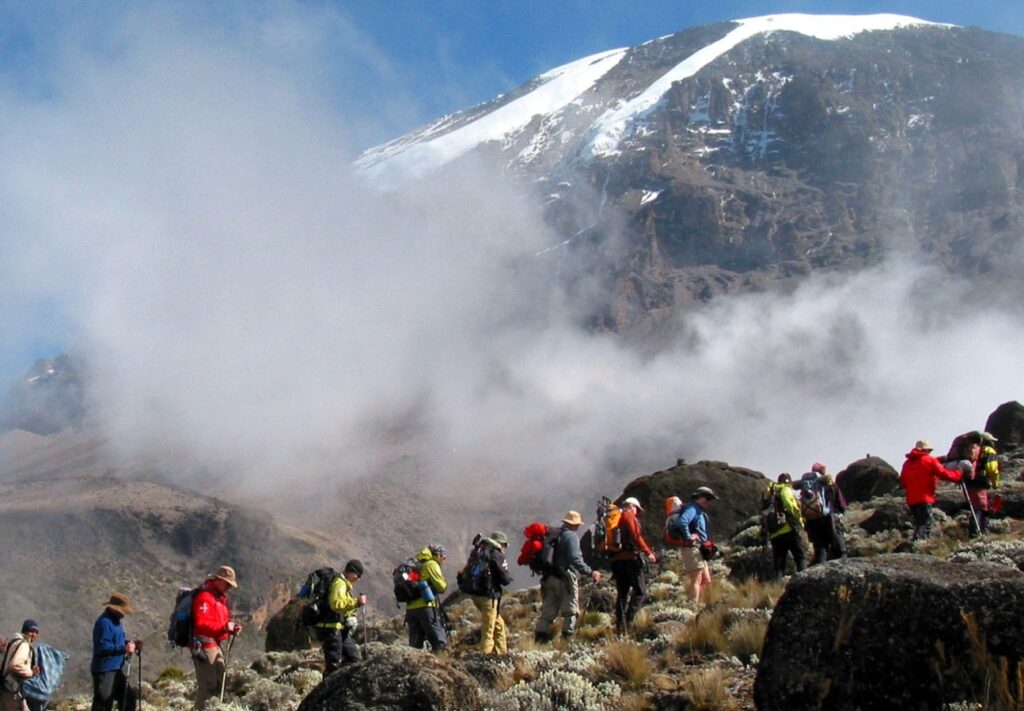
The summit of Kilimanjaro is, for most visitors, the reason everything begins. Uhuru Peak — the highest point on the African continent — sits at 5,895 metres above sea level and is reached via a long, demanding, non-technical hike that requires fitness, acclimatisation, determination, and a good guide. Unlike the great peaks of the Himalayas or the Andes, Kilimanjaro requires no ropes, no crampons, and no technical climbing experience — yet it demands genuine respect. Altitude sickness is the primary challenge, and the slow, gradual ascent routes are specifically designed to give the body time to adapt.

Standing at Uhuru Peak — watching the sun rise over the curvature of the Earth, with the Shira Plateau far below and the remnant glaciers glowing orange behind you — is one of the most profoundly moving experiences a human being can have. It is the moment that makes every cold night in a mountain tent, every exhausted step through the scree, and every predawn summit push completely and entirely worthwhile.

2. The Six Trekking Routes — Each a Different Journey.

Kilimanjaro offers six established trekking routes, each with its own character, scenery, duration, and level of difficulty. Understanding the routes is key to planning a successful summit attempt.

Marangu Route (5–6 days) — Often called the “Coca-Cola Route” for its relative accessibility and hut accommodation, Marangu is the only route that uses the same path for both ascent and descent. It is popular, well-serviced, and a solid choice for first-time high-altitude trekkers — though its shorter acclimatisation profile means summit success rates can be lower than longer routes.

Machame Route (6–7 days) — The “Whiskey Route.” Steeper, more dramatic, and more scenically varied than Marangu, Machame is among the most popular routes on the mountain and offers excellent acclimatisation through its varied terrain. One of the finest routes for photography and for experiencing Kilimanjaro’s full range of ecological zones.

Lemosho Route (7–8 days) — Widely considered the most beautiful route on the mountain. Approaching from the west across the broad Shira Plateau, Lemosho provides exceptional panoramic views, outstanding wildlife encounters in the lower forest, and the best acclimatisation profile of all the southern routes. Highly recommended for first-time Kilimanjaro climbers who want to maximise their summit chances.

Rongai Route (6–7 days) — The only route that approaches Kilimanjaro from the north, through Tanzania’s dry, remote Kenyan border zone. Rongai offers a quieter, wilder experience than the southern routes, with a distinctly different landscape of semi-arid moorland and outstanding night skies. A good choice for those seeking solitude.

Shira Route (7–8 days) — Similar to Lemosho but beginning at a higher elevation on the Shira Plateau, offering dramatic high-altitude landscapes from day one. The higher starting point requires good prior acclimatisation.

Northern Circuit Route (9–10 days) — The longest and least crowded route on the mountain, circumnavigating almost the entire summit cone before ascending from the north. It offers the best acclimatisation profile, the greatest solitude, and the most comprehensive Kilimanjaro experience available. Strongly recommended for those with time to invest.

Lemosh Route
Shira Route

3. Five Ecological Zones
— Five Worlds in One Mountain.

One of Kilimanjaro’s most extraordinary characteristics is the sheer variety of ecosystems it passes through from base to summit — five distinct ecological zones, each as different from the next as separate continents.

Cultivation Zone (800–1,800 m) — The fertile lower slopes surrounding the mountain are covered in Chagga farmland — coffee, banana, and maize plantations interspersed with traditional homesteads. This is where the mountain meets its human community, and where the Chagga culture that has evolved alongside Kilimanjaro for generations remains most visible.

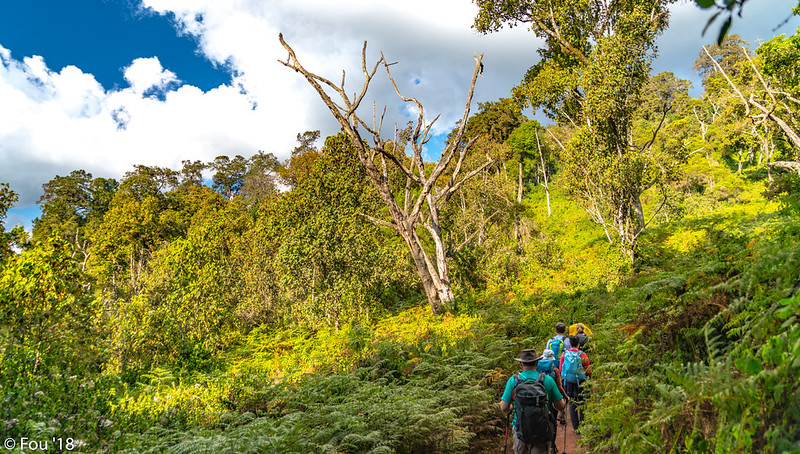
Montane Forest Zone (1,800–2,800 m) — Dense, misty, biologically rich rainforest. Colobus monkeys, blue monkeys, olive baboons, bushbuck, and over 170 bird species inhabit the forest. Tree ferns, mosses, and giant Impatiens create a landscape of deep, dripping green. This zone receives the most rainfall and is frequently wreathed in cloud.

Heath and Moorland Zone (2,800–4,000 m) — As the forest thins, the landscape opens into rolling moorland dominated by giant heath (Erica arborea), everlasting flowers (Helichrysum), and the extraordinary giant groundsel (Senecio kilimanjari) — a plant that looks like something from a science-fiction landscape, reaching heights of several metres with rosettes of silvery leaves. Views begin to open dramatically in this zone.

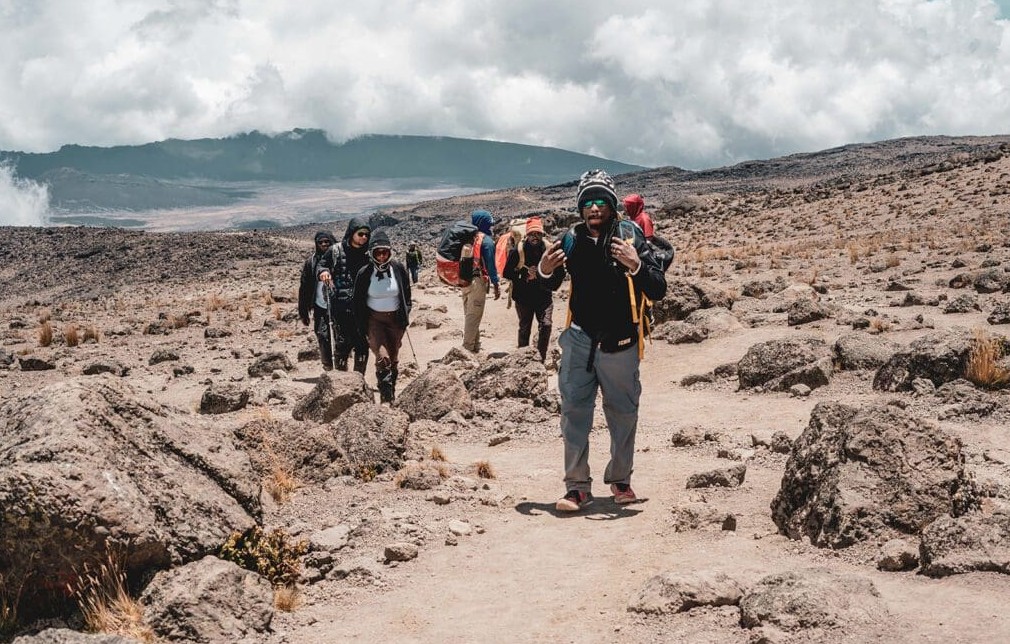
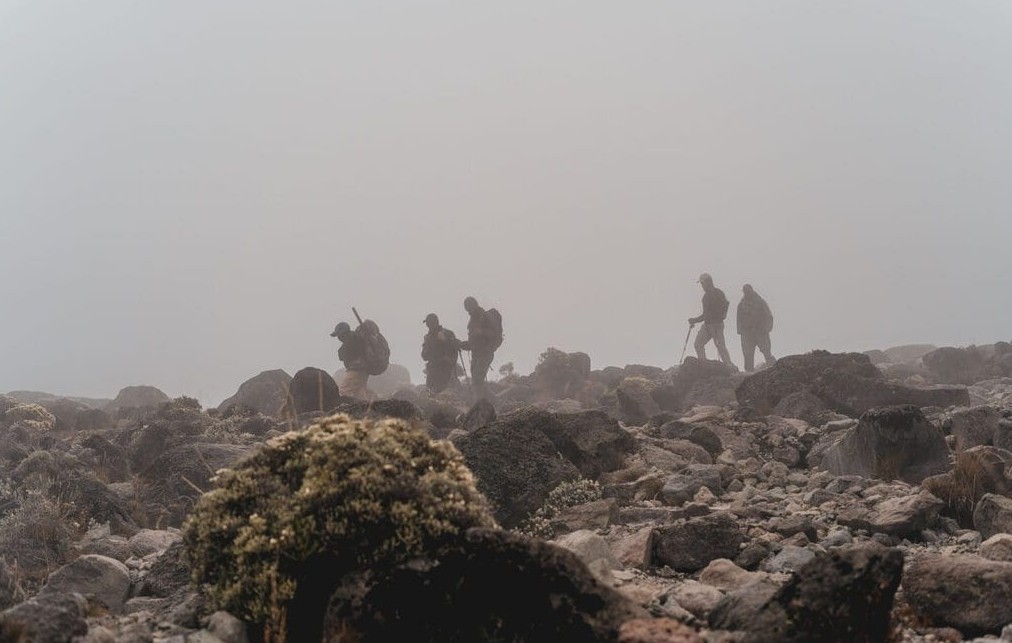
Alpine Desert Zone (4,000–5,000 m) — Above the moorland, vegetation becomes sparse and the landscape turns to an arid, boulder-strewn desert of dust, rock, and sky. Temperatures swing wildly between day and night. The air thins noticeably, the summit glaciers become visible, and the effort of each step increases. It is stark, majestic, and deeply humbling.

Arctic Summit Zone (5,000–5,895 m) — The summit zone is a world of ice, rock, and wind. The remaining glaciers — the famous Furtwängler Glacier and the ice fields surrounding Uhuru Peak — are among the last equatorial glaciers on Earth, and tragically are retreating rapidly due to climate change. The summit crater, Reusch Crater, contains an ash pit and the eerie remnants of ancient volcanic activity. At the summit, the atmosphere contains only approximately half the oxygen available at sea level.

4. Wildlife of the Lower Slopes and Forest Zone.

While Kilimanjaro is primarily a trekking destination, its lower montane forest supports a remarkable range of wildlife that rewards careful, observant travellers on the ascent. Black-and-white colobus monkeys — among Africa’s most spectacular primates — are frequently encountered in the forest zone, often seen in large family groups leaping between giant fig and Podocarpus trees. Blue monkeys, olive baboons, and the shy Harvey’s red duiker are also reliably found in this zone. Elephant, buffalo, and leopard are present in the forest reserve below the park boundary, and leopard spoor is occasionally spotted on the lower park trails.

The birdlife of the forest zone is outstanding, with over 170 species recorded, including the stunning Hartlaub’s turaco, Kenrick’s starling, the white-starred robin, and a variety of stunning sunbird species that feed on the giant lobelias of the upper forest.

5. The Kilimanjaro
Glaciers

Kilimanjaro’s summit glaciers are one of the mountain’s most iconic and most poignant features. The ice fields and glaciers that crown Uhuru Peak have existed for approximately 11,700 years — since the end of the last Ice Age — and were described by early European explorers as a permanent snowfield of stunning scale. Today, however, the glaciers have retreated dramatically: scientists estimate that Kilimanjaro has lost more than 80% of its glacial ice since the late nineteenth century, and the remaining ice fields are projected to disappear entirely within the coming decades.

For today’s climbers, reaching the summit and standing beside the remaining glaciers carries a particular weight — a privilege and a responsibility, a reminder of what we stand to lose and why the mountain, and the natural world it represents, must be protected.

This incredible 15-day East African adventure is the ultimate wildlife odyssey, uniting three countries and offering a blend of classic safari game viewing with the profound experience of gorilla trekking. From USD5,000.00

6. The Chagga
Cultural Heritage.

No visit to Kilimanjaro is complete without an acknowledgement of the Chagga people — the Bantu-speaking community who have inhabited the fertile lower slopes of the mountain for centuries and whose culture, language, agriculture, and identity are inseparable from Kilimanjaro itself. The Chagga developed one of East Africa’s most sophisticated pre-colonial agricultural systems, using an intricate network of irrigation channels (mfongo) to bring meltwater from the mountain’s forests to their farms — a system of remarkable engineering that still functions in parts of the Kilimanjaro Region today.

Cultural visits to Chagga villages, coffee farm tours, and traditional homestead experiences can be arranged in Moshi and the surrounding area as either pre- or post-climb additions to a Kilimanjaro itinerary. Many Kilimanjaro guides and porters are themselves Chagga, and their knowledge of the mountain — its moods, its history, and its secrets — is an invaluable part of every trekking experience.

Other Tourist Activities
at Mount Kilimanjaro National Park:

  • Day hikes and nature walks in the lower forest zone without summit trekking.
  • Wildlife and birdwatching walks in the Kilimanjaro Forest Reserve.
  • Cultural village visits and coffee farm tours in the Chagga homesteads below the park.
  • Mountain biking on the lower slopes and surrounding roads.
  • Photography excursions at dawn and dusk for summit silhouette shots.
  • Visits to Moshi town — the vibrant base camp city at the mountain’s foot.
  • Combined Kilimanjaro and Amboseli cross-border experience — photographing the summit from Kenya’s side.

When is the Best Time to Visit Mount Kilimanjaro?

Kilimanjaro can be climbed year-round, but the mountain’s weather patterns make two main seasons significantly more favourable than the others.

January to March (Short Dry Season) — Arguably the finest climbing season. Clear skies, cold but manageable temperatures, and lower humidity make for excellent visibility and good trail conditions. January and February in particular offer some of the mountain’s clearest summit mornings. This season also coincides with Tanzania’s wildlife calving season on the southern Serengeti plains — ideal for combining a Kilimanjaro climb with a northern circuit safari.

June to October (Long Dry Season) — The most popular climbing season, corresponding with Tanzania’s main wildlife safari window. Conditions are reliably dry, skies are frequently clear, and trails are in their best condition. The mountain is at its busiest during this period, particularly on the Marangu and Machame routes, but the reliability of the weather more than compensates.

April and May (Long Rains) — The wettest months on the mountain. Trails become muddy, cloud cover is persistent, and summit visibility is frequently poor. Not recommended for first-time climbers.

November (Short Rains) — A transitional month with unpredictable weather. Some excellent climbing windows exist but cannot be relied upon.

For the best summit success rates, Umani Bliss Safaris recommends the Lemosho or Northern Circuit routes during January–March or June–October — combining maximum acclimatisation time with the clearest weather windows.

Safari Packages That Include Kilimanjaro.

7-Day Tanzania Northern Circuit Safari | Big Five, Rhino & Tarangire Elephants The complete northern Tanzania experience — Tarangire, Lake Manyara, Serengeti, and Ngorongoro — with Kilimanjaro’s iconic summit as your constant horizon backdrop. From $2,520.
View Safari

5-Day Tanzania Safari | Tarangire, Serengeti & Ngorongoro Crater Tanzania’s most celebrated northern circuit in five expertly curated days, departing Arusha with Kilimanjaro on the skyline from day one. From $2,500
View Safari

11 Days Kenya & Tanzania Migration Safari Combine Kenya’s Masai Mara and Amboseli — where Kilimanjaro rises across the border — with Tanzania’s northern circuit for the ultimate twin-country East African adventure. Enquire for pricing

READY TO GO?

Begin
Your Journey

We are a Kenyan-based tour operator with over 11 years of experience planning holidays and offering affordable, tailor-made safaris and treks across East Africa — crafted to suit our clients’ requirements and budget, with a personal touch that makes every journey feel truly cared for.

Your extraordinary is waiting.

Top Picks

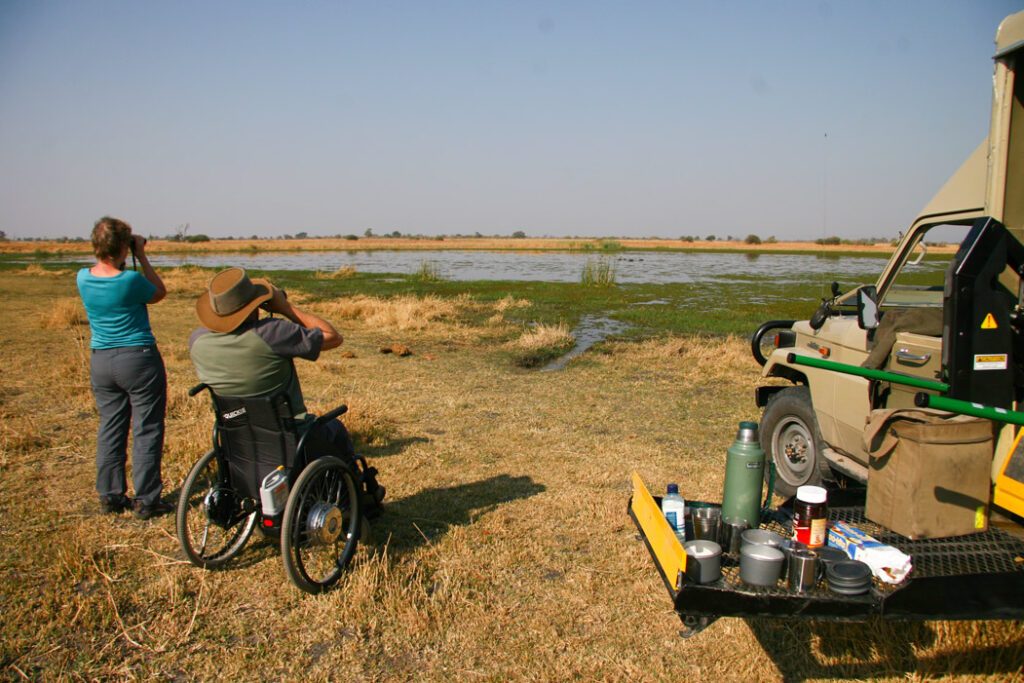
This unforgettable 13-day Kenyan adventure caters specifically to travelers with disabilities, offering a fully accessible exploration of the country's most breathtaking landscapes and wildlife.
Embark on a captivating journey that blends the majesty of Kenya's wildlife with the idyllic beauty of its pristine beaches. This unforgettable Amboseli safari and...

Embark on a captivating journey that blends the majesty of Kenya's wildlife with the idyllic beauty of its pristine beaches. This unforgettable Amboseli safari and...

This exciting 6-day Kenyan adventure is designed specifically for travelers with disabilities, offering a fully accessible exploration of some of the country's most breathtaking national...

This unforgettable 9-day Kenyan adventure is specifically designed for travelers with disabilities, offering a fully accessible exploration of the country's most breathtaking wildlife destinations.

This unforgettable 7-day adventure takes you to Kenya's most popular wildlife destinations, showcasing the country's diverse and magnificent animal kingdom.

Testimonials

Travel Diaries.

Lost your password?